
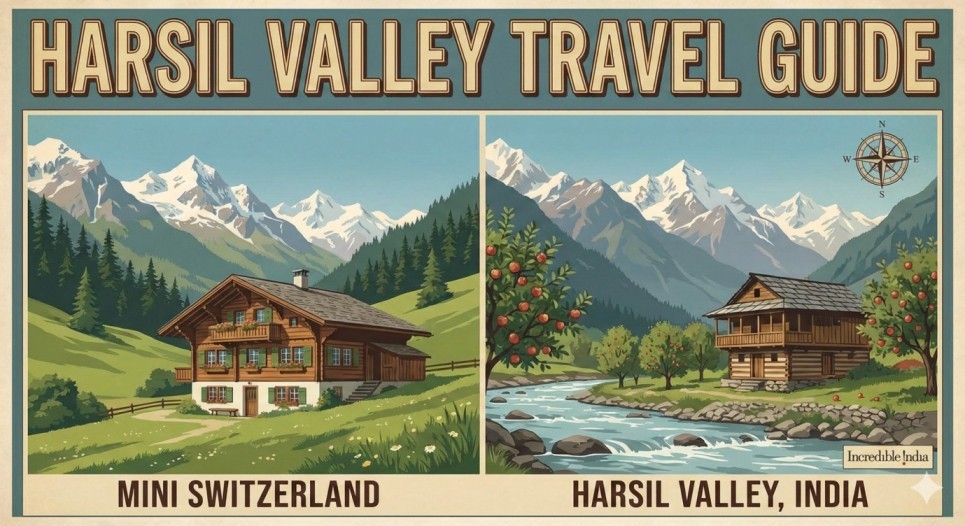

Hidden deep in the Garhwal Himalayas, Harsil Valley is one of Uttarakhand’s most breath-taking yet lesser-known destinations. Snow-capped peaks, apple orchards, pine forests, and the crystal-clear Bhagirathi River give this region a strong European charm.
This Harsil Valley Travel Guide: Why This Is the “Mini Switzerland” of India will help you discover why travellers are increasingly choosing this peaceful valley over crowded hill stations.
Why Harsil Valley Is Called the Mini Switzerland of India
Harsil Valley earns its nickname because of its striking resemblance to the Swiss Alps. The valley combines dramatic mountain scenery with serene villages and untouched nature.
Here’s what makes it special:
- Snow-clad Himalayan peaks visible most of the year
- Vast apple orchards and alpine meadows
- Wooden houses with sloping roofs
- A calm, uncrowded atmosphere unlike mainstream hill towns
Unlike commercial destinations, Harsil Valley Mini Switzerland of India Travel Guide highlights raw beauty over luxury.

Best Time to Visit Harsil Valley (Season-Wise with Activities)
Summer (April to June)
Summer is the most comfortable season to explore Harsil Valley. The weather remains pleasant, and the landscapes are lush and vibrant.
Temperature: 10°C to 20°C
Best Activities:
- Sightseeing and village walks
- Riverside picnics along the Bhagirathi River
- Nature photography and birdwatching
- Exploring Dharali and Bagori villages
Monsoon (July to September)
Monsoon brings fresh greenery and misty mountain views to Harsil Valley. However, frequent rainfall can make travel challenging due to landslides.
Temperature: 12°C to 18°C
Best Activities:
- Enjoying scenic drives and cloud views
- Photography of waterfalls and forests
- Short nature walks during dry spells
- Relaxing stays away from tourist crowds
Autumn (October to November)
Autumn is one of the best times to visit Harsil Valley. Clear skies and crisp air offer stunning Himalayan views, and apple orchards are at their peak.
Temperature: 5°C to 15°C
Best Activities:
- Apple orchard visits and local food tasting
- Landscape and mountain photography
- Leisure walks and cultural exploration
- Spiritual visits en route to Gangotri
Winter (December to March)
Winter turns Harsil Valley into a snow-covered paradise. Heavy snowfall creates magical scenery, though accessibility may be limited in peak winter.
Temperature: -5°C to 8°C
Best Activities:
- Snow walks and winter photography
- Enjoying snowfall and cozy stays
- Peaceful meditation and nature time
- Experiencing local winter lifestyle
Overall Best Season for Harsil Valley
For easy travel and outdoor activities, April to Juneand October to November are ideal.
For snow experiences, plan between December and February.
Where to Stay in Harsil Valley
Harsil Valley offers peaceful, nature-based stays rather than luxury hotels. Most accommodations are simple, cozy, and scenic.
Best stay options:
- Riverside homestays – Perfect for couples and nature lovers
- Apple orchard cottages – Ideal for families and photographers
- Eco-lodges – Comfortable stays with mountain views
- Budget guesthouses – Affordable and basic for short stays

How to Reach Harsil Valley (Short but Detailed)
By Road:
Harsil Valley is located on the Gangotri National Highway, about 73 km from Uttarkashi and 25 km before Gangotri. Regular taxis and buses are available from Dehradun, Rishikesh, Haridwar, and Uttarkashi. Roads are scenic but mountainous.
By Train:
The nearest railway station is Dehradun (≈230 km). From the station, you can hire a taxi or take a bus to Uttarkashi, then continue to Harsil.
By Air:
The nearest airport is Jolly Grant Airport, Dehradun (≈240 km). From the airport, taxis are available directly to Harsil Valley.
Nearby Places to Visit from Harsil Valley
- Dharali (2 km): A scenic village famous for apple orchards and peaceful mountain views.
- Bagori Village (5 km): Known for its traditional Garhwali culture and ancient houses.
- Gangotri (25 km): A major pilgrimage site and the origin of the River Ganga.
- Mukhba Village (28 km): Winter seat of Goddess Ganga, rich in culture and history.
- Uttarkashi (73 km): A spiritual town with temples, ashrams, and local markets.
Why Harsil Valley Is Perfect for Offbeat Travelers
Harsil Valley is ideal for travellers who prefer quiet places over crowded hill stations. It remains untouched by mass tourism, offering raw Himalayan beauty and peaceful surroundings.
- Fewer tourists and no commercial rush
- Stunning alpine landscapes and river views
- Authentic village life and local culture
- Perfect for slow travel, photography, and nature walks
- Ideal for couples, solo travellers, and peace seekers

Experience Uttarakhand Like a Local with Clan Stays
Clan Stays lets you experience Uttarakhand beyond typical tourist routes, offering stays rooted in local culture and nature. Each property is carefully selected to reflect the region’s authentic lifestyle, scenic beauty, and warm hospitality. You enjoy homemade local meals, peaceful surroundings, and genuine interactions with locals. Clan Stays focuses on slow, meaningful travel rather than rushed sightseeing. It’s the perfect way to feel connected to the Himalayas, just like a local.
FAQs – Harsil Valley Travel Guide
1. Why is Harsil Valley called Mini Switzerland of India?
Because of its alpine scenery, snow-clad mountains, apple orchards, and peaceful European-like landscapes.
2. Is Harsil Valley suitable for family trips?
Yes, it’s safe and peaceful, ideal for families seeking nature and quiet.
3. How many days are enough for Harsil Valley?
2–3 days are perfect to explore villages and enjoy slow travel.
4. Does Harsil Valley receive snowfall?
Yes, heavy snowfall occurs between December and February.
5. Is Harsil Valley crowded like other hill stations?
No, it remains calm and uncrowded throughout most of the year.


