
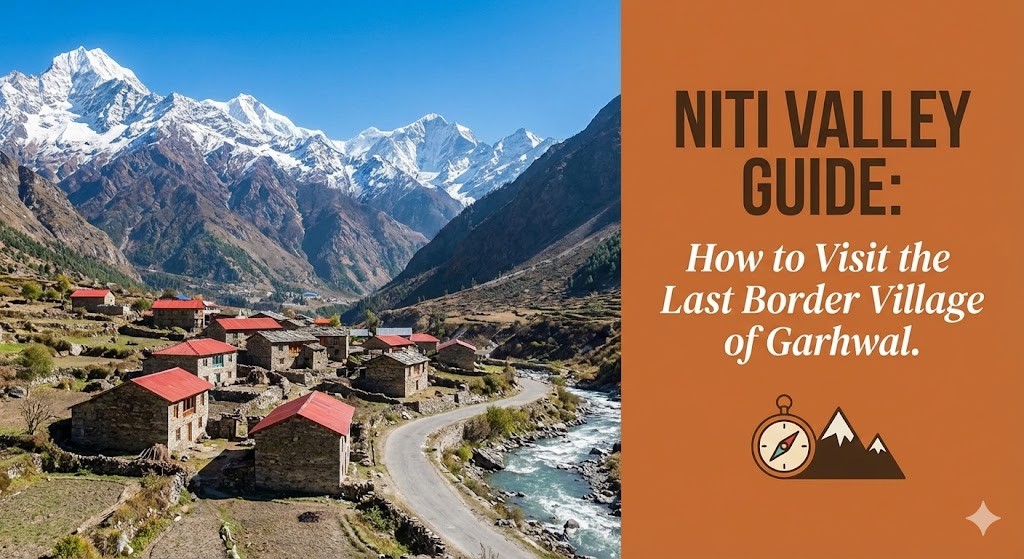

If you dream of standing at India’s edge, this Niti Valley Uttarakhand Travel Guide is for you. Hidden deep in the Garhwal Himalayas, Niti Valley offers raw landscapes, ancient culture, and border tourism experiences unlike anywhere else.
Known as the Last Village of India in Garhwal, Niti Village sits close to the Indo-Tibet border. It is remote, peaceful, and breathtakingly beautiful.
Where is Niti Valley?
Niti Valley is located in Chamoli district of Uttarakhand, near the Indo-China (Tibet) border. The valley lies beyond Joshimath, which serves as the main base town.
The final inhabited settlement is Niti Village, often called the Last Village of India in Garhwal.
Due to its strategic location, entry is regulated and requires permits.
How to Reach Niti Valley
Reaching Niti Valley is a scenic Himalayan journey through the upper reaches of Uttarakhand. The valley lies near the Indo-Tibet border, and the base town for the trip is Joshimath.
Here is a simple step-by-step travel guide.
Step 1: Reach Joshimath (Base Town)
Joshimath is well connected by road to major cities in North India.
By Air
- Nearest Airport: Jolly Grant Airport
- Distance to Joshimath: Approx. 270 km
- Hire a taxi or take a bus via Rishikesh.
By Train
- Nearest Railway Station: Rishikesh Railway Station
- From Rishikesh, shared taxis and buses run toward Joshimath.
By Road
Regular buses and private taxis operate from:
- Haridwar
- Rishikesh
- Dehradun
The drive follows the Alaknanda River and offers stunning mountain views.
Step 2: Joshimath to Niti Village (Approx. 85 km)
From Joshimath, you must travel by private vehicle or local taxi to Niti Village.
Route:
Joshimath → Tapovan → Malari → Gamshali → Niti
- Distance: Around 80–90 km
- Travel Time: 4–5 hours
- Road Condition: Mountain roads maintained by BRO (Border Roads Organisation)
This stretch is part of the famous Niti Valley Road trip and offers dramatic high-altitude landscapes.

Best Time to Travel to Niti Valley
The best time to visit Niti Valley in Uttarakhand is between May to June and September to October. Since it is a high-altitude border region, weather plays a crucial role in travel planning.
May to June (Summer – Ideal Season)
This is the most popular time to visit Niti Valley.
- Pleasant daytime temperatures (10°C to 20°C)
- Clear mountain views
- Roads fully accessible
- Perfect for road trips and photography
If you want comfortable weather and safe travel conditions, this is the best time.
July to August (Monsoon – Avoid If Possible)
Monsoon brings heavy rainfall in the Garhwal Himalayas.
- Risk of landslides
- Slippery mountain roads
- Occasional road blockages
Travel during this season can be unpredictable.
September to October (Post-Monsoon – Excellent)
Another great window for visiting.
- Fresh greenery after rains
- Crystal-clear Himalayan views
- Fewer tourists compared to peak summer
This is ideal for peaceful exploration and border tourism.
November to April (Winter – Closed)
Heavy snowfall blocks access to Niti Village.
- Roads remain closed
- Harsh temperatures below freezing
- Limited or no tourist movement
The valley is mostly inaccessible during winter months.

Niti Valley Permit Information
Since Niti is a border area, permits are mandatory.
Who Needs a Permit?
- Indian citizens require Inner Line Permit (ILP).
- Foreign nationals are generally restricted beyond certain points.
How to Get a Permit?
- Apply at Joshimath SDM office.
- Carry valid government ID proof.
- Vehicle details are required.
Permits are usually issued for a day visit or limited stay.

Places to Visit in Niti Valley
Located in the remote border region of Uttarakhand, Niti Valley is known for its raw Himalayan beauty, traditional villages, and strategic Indo-Tibet frontier views. If you are planning a trip to the Last Village of India in Garhwal, here are the must-visit places.
1. Niti Village
This is the final inhabited village near the Indo-Tibet border. The stone houses, prayer flags, and traditional Bhotiya culture make it unique. Life here is simple, peaceful, and deeply connected to nature.
2. Malari Village
Malari is one of the most scenic villages in the valley. Surrounded by towering peaks and river valleys, it is a perfect stop for photography and short walks. The wooden architecture reflects Indo-Tibetan influence.
3. Gamshali Village
Gamshali is among the highest villages in the region. It offers panoramic Himalayan views and a chance to experience authentic mountain life. The quiet environment makes it ideal for slow travel.
4. Dronagiri Village
Dronagiri is linked to the Ramayana legend of the Sanjeevani herb. The village sits amidst dramatic mountain landscapes and offers a glimpse into local mythology and culture.
5. Niti Pass (Viewpoint Area)
Close to the Indo-Tibet border, Niti Pass is a restricted zone. While full access is limited, permitted visitors can explore nearby viewpoints offering stunning high-altitude scenery.
6. Tapovan (On the Way from Joshimath)
Located near Joshimath, Tapovan is known for its hot water springs and spiritual atmosphere. It makes a great stop before entering Niti Valley.

Plan a Safe Niti Valley Road Trip with Clan Stays
Plan your Niti Valley Road trip with Clan Stays for a smooth and worry-free Himalayan adventure. We handle permits, route planning, and experienced mountain drivers so you can travel safely in this sensitive border region. Our team ensures comfortable stays and real-time support throughout the journey. With Clan Stays, you explore the Last Village of India with confidence, safety, and expert guidance.
FAQs
1. Why is Niti Village called the Last Village of India in Garhwal?
It is the last inhabited settlement near the Indo-Tibet border in Chamoli district.
2. Do I need a permit to visit Niti Valley?
Yes, Indian citizens need an Inner Line Permit issued in Joshimath.
3. Is Niti Valley safe for tourists?
Yes, but it is a sensitive border area. Follow army and local administration rules.
4. What is the best time to visit Niti Valley?
May–June and September–October are the best months.
5. Can foreigners visit Niti Village?
Foreign nationals have restricted access and should confirm current rules before planning.


