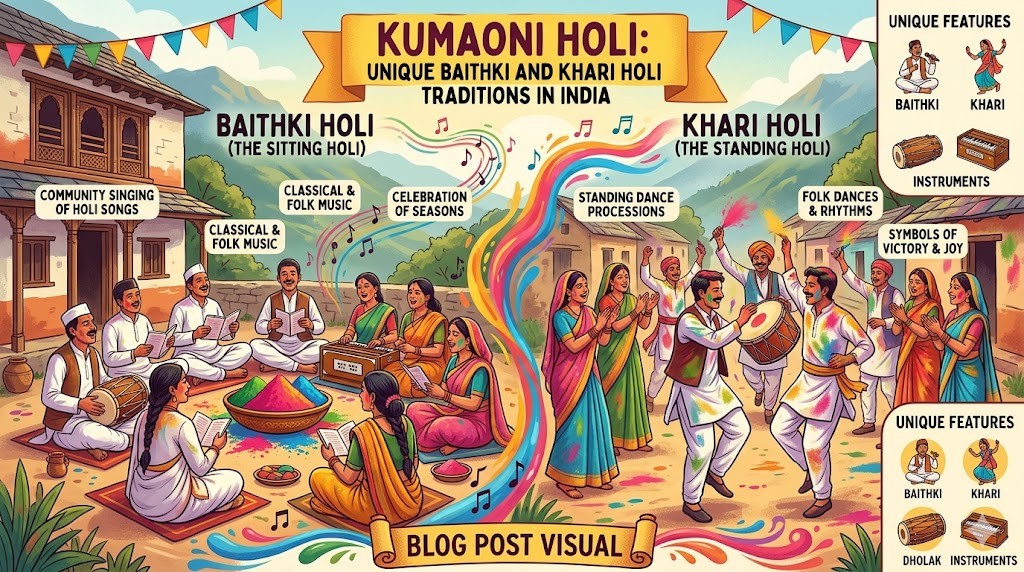
Kumaoni Holi Baithki and Khari Holi traditions are unlike any other Holi celebrations in India. Rooted in music, culture, and devotion, this festival in Uttarakhand transforms Holi into a soulful experience. If you’ve only seen the colour-filled chaos of mainstream Holi, get ready to discover a refined and musical side of the festival in the hills. Why Kumaoni Holi is Unique in India Unlike the loud and playful Holi seen across cities, Kumaoni Holi is deeply cultural and musical. It blends classical ragas, devotional songs, and community bonding. Here’s what makes it stand out: This is why it is considered one of the most unique Holi celebrations in Kumaon Uttarakhand. Types of Kumaoni Holi Celebrations 1. Baithki Holi in Kumaon Baithki Holi is a musical gathering held indoors, usually in temples or homes. Participants sit together and sing classical Holi songs. Key Features: This form reflects the intellectual and artistic side of Kumaoni culture. 2. Khari Holi in Kumaon Khari Holi is more vibrant and is celebrated outdoors. People sing, dance, and move in groups through streets. Key Features: Khari Holi adds energy and joy while still maintaining cultural roots. 3. Mahila Holi (Women’s Holi) This is a special version where women gather and sing traditional songs. It highlights the role of women in preserving culture. Baithki Holi and Khari Holi in Kumaon: Key Differences Feature Baithki Holi Khari Holi Location Indoors Outdoors Style Classical & devotional Folk & energetic Music Ragas-based Traditional folk tunes Participation Seated gathering Group dancing & singing Atmosphere Calm and spiritual Lively and festive Best Time to Experience Kumaoni Holi The best time to experience Kumaoni Holi Baithki and Khari Holi traditionsis from Basant Panchami to Holi (February–March). Detailed Breakdown Phase Time Period Experience Beginning Basant Panchami Start of Baithki Holi (musical sessions) Mid Celebration Feb–Early March Regular Baithki & Mahila Holi gatherings Peak Celebration Holi Week Vibrant Khari Holi with dance & colours Why This is the Best Time Cultural Significance of Kumaoni Holi Kumaoni Holi Baithki and Khari Holi traditions are more than just festive celebrations—they are a reflection of the rich cultural identity of the Kumaon region. This unique festival beautifully blends devotion, music, and community spirit. 1. A Celebration of Music and Art One of the biggest reasons why Kumaoni Holi is unique in India is its deep connection with music. This makes it not just a festival, but a living musical heritage. 2. Strong Community Bonding Baithki Holi and Khari Holi in Kumaon bring people together across all age groups. It strengthens relationships and creates a deep sense of belonging. 3. Spiritual and Devotional Essence Unlike the commercial Holi celebrations, Kumaoni Holi has a spiritual core. This devotional aspect adds depth and meaning to the festival. 4. Preservation of Kumaoni Traditions The traditional Kumaoni Holi celebration guide reflects how locals have preserved their heritage over generations. It plays a key role in keeping the Kumaoni culture alive. 5. Balance of Grace and Joy Unique Holi celebrations in Kumaon Uttarakhand maintain a rare balance between elegance and festivity. Together, they create a complete and meaningful celebration. If you’re planning to experience Kumaoni Holi, here’s how to make the most of it: Best Places to Experience What to Expect Travel Tips Make Your Holi Trip Memorable with Clan Stays Make your Holi trip truly special by staying with Clan Stays, where comfort meets authentic Kumaoni culture. Enjoy warm hospitality, cozy accommodations, and easy access to vibrant Baithki and Khari Holi celebrations. Wake up to scenic mountain views and immerse yourself in local traditions like a true insider. With Clan Stays, your Holi becomes more than a festival—it becomes a meaningful cultural experience. FAQs 1. What is Kumaoni Holi famous for? Kumaoni Holi is famous for its musical traditions, especially Baithki and Khari Holi, which combine classical ragas with folk celebrations. 2. When is Kumaoni Holi celebrated? It begins around Basant Panchami and continues until Holi in February–March. 3. What is the difference between Baithki and Khari Holi? Baithki Holi is a seated musical gathering, while Khari Holi involves outdoor dancing and group singing. 4. Where can I experience Kumaoni Holi? You can experience it in places like Almora, Ranikhet, and Nainital in Uttarakhand. 5. Why is Kumaoni Holi considered unique? It focuses on music, culture, and community bonding rather than just colours, making it one of the most unique Holi celebrations in India.